Checkmate in Iran?
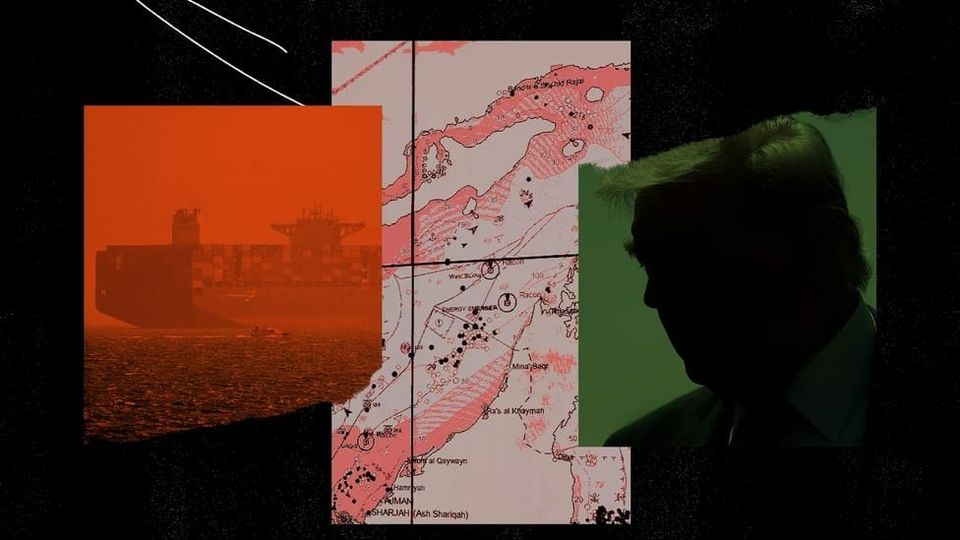
Robert Kagan, the author of “The Return of History and End of Dreams”, renowned neo-conservative policy leader, and pundit, claims that the cost of American “failure” in its current conflict with Iran could be, “…neither repaired nor ignored.”
Kagan believes that the American position in the Pacific in 1941 was, essentially, easier for the United States to overcome than the current situation in Iran.
That Pearl Harbor, losing the Philippines to Imperial Japan, and most of the Western Pacific, was not as dire as the current situation the United States faces in Iran.
This is pure hysteria.
First, the situation has yet to conclude.
Second, losing control of the entire Pacific to Imperial Japan compared to non-control of the Strait of Hormuz is hardly a rational comparison.
Third, Iran has always been a “key player in the region and globe”.
Finally, Kagan provides multiple realities that, certainly, negatively impact the United States. But we have been on this train for some time.
Kagan’s main argument is that failing capture complete control of the Strait of Hormuz will mean that the world knows America is unreliable, wipe away the illusion of military supremacy, and diminish America’s ability to achieve its interests globally, and irrevocably for some, undefined, period.
Lack of American reliability has been a hard reality of American foreign policy since the Korean War. Top of mind case studies: Vietnam War, Somalia, 1982 Beirut Bombings, 1994 and 1996 Kenyan terrorist attacks, Afghanistan, Iraq (1991, 2003-2011, 2014-2017), infamous “red line” in Syria, 2011 Arab Spring, etc.
Sadly, this is a well-established international understanding of American power. It’s a feature, not a bug of a republic. We quickly burn through domestic political support and patience. And our eyes are always bigger than our stomachs.
As for the illusion of American military power, Kagan rightfully highlights that we have depleted tremendous amounts of our exquisite firepower. And that relying on Douhet’s Air Power Theory does not yield desired military outcomes. Again, realities that most national security practitioners have understood since Robert McNamara’s aerial campaigns in Vietnam.
Does this mean the United States has only one card left?
Full-scale ground invasion?
No.
Does it mean that ground forces would be necessary, special operations, or some hybrid approach, in a limited ground strike? Perhaps. But the United States still has tremendous amounts of “dumb munitions” that could be weaponized if the President so decides.
The other serious problem that Kagan rightly illuminates is how to protect GCC energy assets. They are juicy targets for the Iranians to seek. And the repercussions of degraded energy producers are stark. However, the clean line that Kagan draws from that vulnerability to the United States becoming a 21st-century “has-been” power is aggressive.
Further, the world has been awakening to supply chain vulnerabilities and the end of Bretton-Woods regime for at least a half-decade. (Do you remember COVID? Or President Trump’s first term?)
While Kagan focuses on the Iranians' belief that a deal with the United States and Israel is key to their survival, he misses the forest for the trees. What is more important is whether the world believes the Strait is safe, e.g., whether insurers and shippers can transport goods at low enough costs to fuel nations reliant on energy flows from the Middle East.
The markets need to believe whoever declares the Strait safe can deliver on that promise. Iranians, Americans, whoever. The promise will have to be kept. And even though it appears Kagan hopes it’s the Iranians, America still can make that promise.
But Kagan is correct to doubt if the United States will want to make that promise.
Finally, the idea that the Gulf States will bow to the Shia and non-Arab Persian regional power is startling. That would ignore thousands of years of history, deep religious issues, and cultural aspects of Sunni-Arab anthropology that would truly be stunning.
In summation, Kagan is correct.
The United States is in a pickle. With serious consequences and no easy or appeasing option.
He is wrong, however, in presenting this as a “do-or-die” moment for the American Empire. And that the only way to victory is replicating the Panama Canal in the Arabian Gulf via a full-scale war. Or that failure means the United States becomes a second-rate power.
Member discussion