Citizen's Guide to Writing and Effective Communication
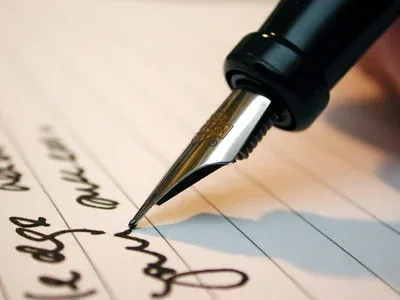
“Writing is simple, sit there and draw blood from stone.” This is a living document I use to help sharpen my writing craft. I select various tools for professional writing, and others for personal correspondence. And still others, for writing in Brubarian.
I have outlined my general approach to writing and highlighted the specific practices I employ in various situations.
At the end of this post, I have listed links to the books I have found helpful.
General Rules and Practices
Heinlein - Since October 2025, I have followed a set of rules from Robert Heinlein, a founding father of sci-fi writing. His rules are simple:
1. You must write.
2. You must finish what you start.
3. You must refrain from rewriting unless to editorial order.
4. You must put it on the market.
5. You must keep it on the market until its sold.
Now, as a non-author, the fifth rule is not absolute. But the other four I steadfastly follow. Why? Simply, because “writing is thinking.” I find that until I have sat down in front of a keyboard or am armed with pen and paper, my mind races and is incapable of determining a proper conclusion.
Rules two and four are rules that align with the way in which I desire to live; completing my tasks and possessing enough courage to have my thoughts and ideas sharpened by the public.
I have found the third rule to be a smart railing for productivity. Vomit upon the page. And clean up once I am retching bile.
C.S. Lewis -A master of his craft, to ignore his guidelines would be hubris. While Lewis, as Heinlein, is skewed towards novelists, writing a craft of communication, truth, and persuasion. These lessons have been compiled across various sources. Bolded rules are ones I find particularly useful.
1. Discard originality, focus on the truth.
2. Know exactly what you want to say, and that what you said is exactly what you wanted to say.
3. Focus on simple descriptions.
4. Read every sentence and word out loud. The ear is more important than the eye.
5. Practice is all. Small incremental action drives improvement.
6. Describe the event or feeling over using adjectives. Do not ask your reader, “Will you do my job for me?”
7. Direct description, metaphors, and similes allow your reader to experience it. Don’t feed them the experience.
8. Concrete words. Say who is doing what.
9. “Verbicide” is the killing of a word. Don’t reach for a word so that you may sell, use the appropriate word. Don’t abuse the meaning. Be sure you know the meaning(s) of every word you use.
10. Take great pains to be clear. Remember that though you start by knowing what you mean, the reader doesn’t, and a single ill-chosen word may lead him to a total misunderstanding.
Jeff Bezos’ “Write like an Amazonian” – One of Jeff Bezos’ signature business practices was to disband the use of PowerPoint. If a decision or update was necessary, Bezos required a written memo to be submitted in lieu of a deck. During leadership meetings, he would allocate the first 15 minutes for his team members to read the memos before continuing the meeting to discuss the decisions. His rules for writing are brief and excellent. Especially for business settings.
1. Use less than 30 words per sentence.
2. Replace adjectives with data.
3. Eliminate “weasel words”. I believe, we think, it’s possible.
4. Ask, does your writing pass the, “so-what”, test?
5. If you receive a question, there are only four acceptable responses: Yes, No, a number, and “I don’t know, I’ll follow up and report back.”
6. Write objectively, avoid adjectives.
7. Avoid jargon and acronyms.
8. Always explain technical terms, acronyms, and abbreviations the first time they appear.
“100 Ways to Improve Your Writing” - The Ritual of Writing
In “100 Ways to Improve Your Writing”, author Gary Provost recommends establishing a ritual for writing periods. The purpose of the ritual is to cue your mind and body to enter a state of flow for writing. To create muscle memory. The most effective way to do this is to set aside a specific time for writing every day.
For professionals who aren’t journalists, authors, or media creators, this can be exceedingly difficult. Personally, my ritual for personal fulfillment and cleansing is that the first task I complete when getting to work is to write one to three pages in my journal. I park my emotions and off-work ideas onto paper to clear my mental warehouse for work that day.
As for professional writing, whether that’s a research report, a company analysis, or compiling my thoughts for this Substack, I find it challenging to set aside dedicated time periods for writing. As my work schedule and duties demand material attention, as does my role as a father to two young children.
I have no illusions that if I were more diligent, I would be able to carve out 30 to 60 minutes per day entirely focused on writing. That is a procedure I seek to update int the coming months. I do believe, wholeheartedly, that creating muscle memory and unique pre-writing rituals yield superior results in thought, clarity, and prose.
Other lessons from “100 Ways to Improve Your Writing”:
1. If your audience likes you, they are more likely to stay with you. * An exceedingly difficult designation to obtain. Though if you are reading this, I imagine we are on the path to likability. I hope you find my word vomit accretive to you. And if not, I ask you to revisit my writing from time to time to see if I have met your standards. *
2. Grow your vocabulary. Instead of immediately using the word that comes to mind, consult a thesaurus to ensure the word communicates what you mean. (See C.S. Lewis Rules.)
3. Reading newspapers help to learn lean writing, an essential skill in business, policy, and decision-making. Journalists are honed to pack multiple facts into a single sentence.
4. Reading mystery and romance novels teaches you how to build tension and invoke curiosity.
5. Populate your writing. You sharpen your craft by sharing your thoughts and projects with others.
6. Every communication should have an outline.
7. Never write to everyone. Create an avatar and write to that single entity.
8. Always find a slant. For example, an unslanted topic could be, “Stained Glass Window.” A slanted version is, “The History of Stained Glass Window Manufacturing”.
9. Your lead is everything. It should be proactive. The hook exists to entice, seduce, and entrap your reader. *Another difficult accomplishment.*
10. Never promise your reader something you cannot deliver.
11. Give your reader something to care about, make it personal.
12. “Cross out every sentence you can until you cannot do without.”
13. For each paragraph, ask yourself, “What do I want to say? What point am I trying to make? What question do I want to present?”
14. Steal great writing. “Steal from one writer, it’s plagiarism, from many -research.”
15. Use short and dense words. Specific nouns. And action verbs.
16. Always active voice. *John picked up the bag.*
17. Listen to what you are emphasizing in each sentence.
18. Anecdotes are reader pleasers.
19. Use examples, list sources, and never interrupt your reader.
20. Have a strong title.
Comments ()