Lessons of Lycurgus – Part I: Power, Principle, and the Price of Character
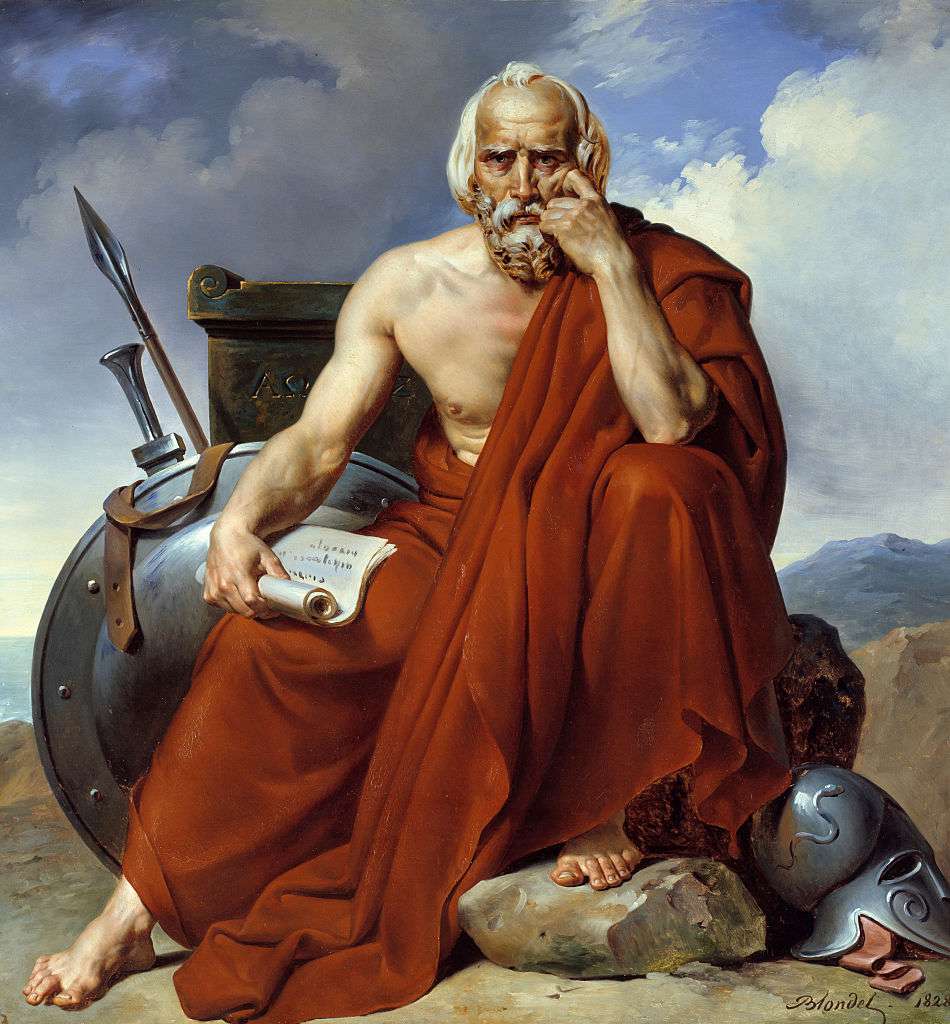
Lessons of Lycurgus – Part I: Power, Principle, and the Price of Character.
Plutarch begins his account of Lycurgus in “The Lives of Noble Grecians and Romans” by describing him as the “lawgiver of Sparta.” After briefly citing various accounts of Lycurgus’ lineage, Plutarch immediately introduces us to this nobleman at the precipice of a Faustian deal presented to Lycurgus – power or principal?
During Lycurgus’ time, Sparta was in tumult. His father was the king, and while trying to quell a riot, the king was stabbed to death in a market. The crown was passed to Lycurgus’ older brother, Polydectes, who also died shortly after. (Plutarch does not provide the cause of death.) And so, it was Lycurgus’ turn to ascend to the throne.
However, Polydectes’ widow, Lycurgus’ sister-in-law, was pregnant. And if the unborn child emerged male, the child would have a direct claim on the throne over Lycurgus. By Spartan custom, this would make Lycurgus “prodicus”, a regal jurisdiction assigning Lycurgus as a guardian of the crown until the boy came of age.
The Queen-regent, though, had other plans. Why suffer the indignity of Queen-regent when you could become Queen? As such, she approached Lycurgus and offered, “...to destroy the infant…” and become Lycurgus’ wife. A solution that would cement Lycurgus’ rule and lineage as the future rulers of Sparta.
Morally, the choice is clear. Yet, examining this situation dispassionately, and purely from the viewpoint of self-interest, this is a compelling offer. The Ancients were no strangers to violence or drastic actions to seize power. (And you’re asleep if you think the world has evolved past that.)
Let’s put ourselves in Lycurgus’ shoes.
Our father and brother are dead. The crown is ours. We now have a situation where this child could be male. And therefore, places a time limit on our power. Who among us doesn’t believe that if they were in charge, we would be better at governance than another? Who doesn’t want to leave their future children the opportunity to rule? To cement legacy? Further, we know that this woman’s dedication to power knows no bounds. She would terminate her child to protect us. An asset, though, albeit extremely dangerous. (I’d sleep with one eye open next to this broad.)
Why not accept? And who says we must maintain the alliance with this woman? Why not wait until she handles her child, and then have her disposed? We would eliminate the threat to our rule and a dangerous player.
It’s also our duty to think through what not accepting the offer means. By telling our sister-in-law that we do not accept, we will create a powerful (mother of the future king) enemy—one who is scorned and embarrassed. And while Plutarch doesn’t mention her name or lineage, one would have to assume that the wife of the heir to the throne has her own social network among elites. Further, for the rest of our lives, each time we enter court, this woman would be reminded of her evil offer and how we rejected it. An enormous weight to carry, with untold future and self-induced headaches for us, if we do not accept.
A classic situation in which it’s not only a dilemma between moral right and wrong but a pragmatic weighing of what is “smart” and what is not.
It bears remembering that, regardless of the decision we make, it is unlikely that many will be aware of the choice. (How Plutarch knew of this offer is lost to history; historians speculate that it was part of Spartan lore, possibly passed down through Ephorus or Hellanicus.) For our purposes, let us assume that very few would know about this offer and our role in it during our lifetime.
We, through the eyes of Lycurgus, have a binary decision. Accept the offer or reject it. Search your heart. Face the mirror. What would you do? Why? Do you possess the constitution to live with that choice?
The problem and beauty of humanity is that we are half-animal, half-angel. Half of us can taste the glory of accepting—the other half shudders at the idea of acceptance. At least, that’s the conclusion I came to as I sat and meditated on what I would have done.
But how does Lycurgus handle this situation? He was a cunning man. Ah. Did you find that descriptor induced a negative imagery? The word has indeed been distorted to carry a negative connotation. But its definition, “marked by artful subtlety and deceptiveness, executed with or exhibiting ingenuity”, does not demand such a reaction.
Lycurgus, “…abhorring the woman’s wickedness, he nevertheless did not reject her proposal…” but responded to the offer by stating he would not want her person to be put in jeopardy through such a task, and that he would “…see to it, that the child, as soon as bord, should be taken out of the way.”
Our nobleman astutely recognized the problem of a straight rejection. He chose to placate the woman, signaling alignment of thought and purpose, while persuading her not to harm the child out of his concern for her well-being. Lycurgus acts in a way that protects the unborn child of his dead brother, pacifies his sister-in-law, and retains his moral character. And to be fair, there’s embedded optionality here. The child could be female. Lycurgus could change his mind. He uses this opportunity to create time and space.
This heuristic is applicable to more than a situation where one must choose between power and innocent life. This decision placed before Lycurgus is a stark illustration of the ultimate tension between self-interest and character.
For public market investors, non-material public information, “NMPI”, is a lesser form of this dilemma. There is nuance regarding NMPI laws and how the Securities Exchange Committee (“SEC”) applies the law. Still, the gist is that it’s illegal to sell or buy public securities (stocks, bonds, etc.) when you have information that is not available to public and/or shouldn’t be known.
For example, imagine a friend works at Apple and calls you, a hedge fund portfolio manager, with an offer: “Listen to what I’m going to tell you, we can make 10x our money if you do what I say.” He proceeds to tell you that Apple has sold more iPhones this quarter than in the last two years combined, and the market doesn’t know it.
Unlike Lycurgus’ situation, no lives are at risk. But like his dilemma, you know that you can make enough money, .e.g., gain power, on this trade to retire your bloodline. And that, if you’re smart, diligent, and extremely lucky, you may be able to escape the ire of the public, e.g., the SEC, the DOJ. You also know that if the regulators did find out, you and your buddy would be shooting hoops at a federal prison for nearly a decade.
You also know that, while not obviously immoral, this action harms the institution of public markets. That cheating erodes trust in American financial markets. Which, in part, is why the American financial market is the best option. The rules are known, and people believe, rightly or wrongly, that in a broad sense, the board is level. You know that by seizing this opportunity, it directly and indirectly harms other parties, not involved with this potential decision, more than the profits you would gain from this action.
Do you have a duty to the institution of free markets? A responsibility to protect its integrity? Or at least not add to its degradation?
You whisper to yourself, who wouldn’t take this deal? And other rationalizations flood the mind as greed seizes your heart, “Everyone else is doing it.” Or “This is a victimless, quote-on-quote, crime.”
Anyway, how would you tell your friend that you’re not going to do it? Relationship ruined. Internal feelings that you are a bitch run wild. The cost-benefit analysis instantly triggers an infinite loop in your mind. Make the trade, don’t make the trade. Make the trade, don’t make the trade.
For some, they would only deny the offer due to the risk of imprisonment. The legal risk versus the moral calculus. And perhaps, that’s why some laws exist. To backstop moral shortcomings.
Yet, Lycurgus shows us the way. He denied himself the crown not only due to his sense of morals, but he also understood that accepting such an offer would erode the legitimacy of the Spartan crown. And he did so in a way that protected his relationship with the queen-regent.
These decisions are all around us. And as Citizens, each action matters. We decide, through our actions, how we protect or harm the systems that enable the American way of life.
Is it all about “getting mine”? Or does sacrificing personal gain, at times, for the good of the body politic, carry weight? What duty, if any, does a private Citizen have? Do we have obligations?
As Citizens, we rarely encounter such circumstances where we are forced to choose between our character and instant, enormous riches or power. That fact, however, does not excuse us from sharpening ourselves and preparing for that potential eventuality.
This was first lesson from Lycurgus’ example. Learn how to honor your own principles over greed and pride in a tactful, cunning manner. Choose to believe that the whole is worth more than the part. That power should only be wielded by those with the character and constitution to navigate such predicaments successfully.
Next, we will examine how Lycurgus responds when the child is born.
Comments ()