President Trump In China: Gatekeeping American Money Flows through the COINS Act
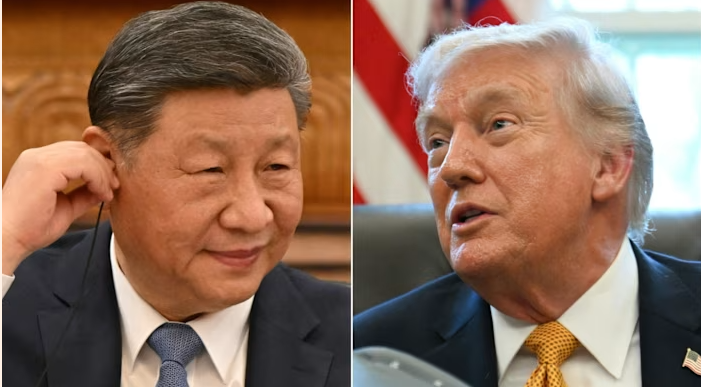
Since it’s the soup du jour, and the power granted to me through the blue-check X verification, I will pile onto the current discourse. Albeit through a different lens than the tired geopolitical prediction vomit and all the speculation on what President Trump “should” do.
Let’s talk about an efficient policy decision that enables the Treasury Department to put up serious hurdles for American allocators looking to invest in China.
The role of becoming a China hawk is a rare area of bipartisanship in the current parliamentarian theater of our Congress. Evidenced by the overlooked but underappreciated “Comprehensive Outbound Investment National Security Act”, (COINS Act) signed into law through the FY 2026 National Defense Authorization Act last December.
The COINS Act was the codification of President Biden’s Executive Order 14105, with further controls and limitations.
The goal of the COINS Act is to prohibit American money from flowing into “countries of concern” (namely, China, including Hong Kong and Macau Special Administrative Regions). And across five sectors: 1) artificial intelligence, 2) quantum computing, 3) microelectronics, 4) hypersonic systems, and 5) advanced computing.
Even if an American investor is a passive LP check, they must obtain a “contractual assurance” from the investment firm that American funds will not flow into areas of “prohibited” or “notifiable” transactions. Or invest only a “de minimis” amount, which will be decided by July 2027 by Secretary Bessent.
One may wonder why this legislation didn’t already exist or why allocators would want to use American pension money to fund Chinese competition.
Well, in 2023 alone, “…major U.S. financial institutions provided $6.5 billion to 63 PRC companies that the U.S. government has blacklisted or otherwise red-flagged because they advance PRC’s military capabilities…”
Our fellow citizens at BlackRock invested at least $1.9 billion into companies that develop advanced fighter jets and “nuclear weapons” for the People’s Liberation Army.
Granted, some of this investment was through index funds, but at least $671 million was directly invested into companies on the 1260H list (“Chinese Military Companies”) and $111 million into Uyghur Forced Labor Prevention Act (“UFLPA”) – basically a list of companies that use forced slave labor.
And while Sequoia got smart quickly (in 2024 they split their Chinese operations from their American one), Sequoia Capital still helped raise $700 million for “4Paradigm”, an AI company that “…the PLA contracted to develop a battlefield management and command decision-making program.”
So, yes, the COINS Act was necessary because American money was heavily flowing into the world’s second-largest economy. And funding Chinese military programs.
Now, the COINS Act has created a barrier for American allocators to invest in China. The ambiguous language, unknown impending modifications, paperwork drills, and brain damage now required for allocators to invest in any country of concern is accomplishing the legislation's spirit.
Because of that, President Xi could seek to alleviate this capital flow-gating legislation. Given, however, that Jensen Huang was not invited to this clambake, it is a hopeful indicator that the carrot of American investment is not on the table
.The United States is not just a military superpower but a financial one. Our capital markets expertise, investment acumen, and entrepreneurial drive are additional tools in our toolkit.
The private sector has been slow to recognize its moral duty to at least not invest in technology or companies that could be used to kill other Americans, with American money (Alexander Hamilton would not approve.)
Let’s hope Congress keeps passing necessary legislation, such as the COINS Act.